Honda CB750 Cafe Racer: Donor Guide & Parts
One of the most popular vintage Japanese fours for cafe builds, and mechanically well understood. It is heavy (about 480 lb dry) and wide, and the sensible move is to build a K1 to K8 or an F rather than cut a collectible K0.
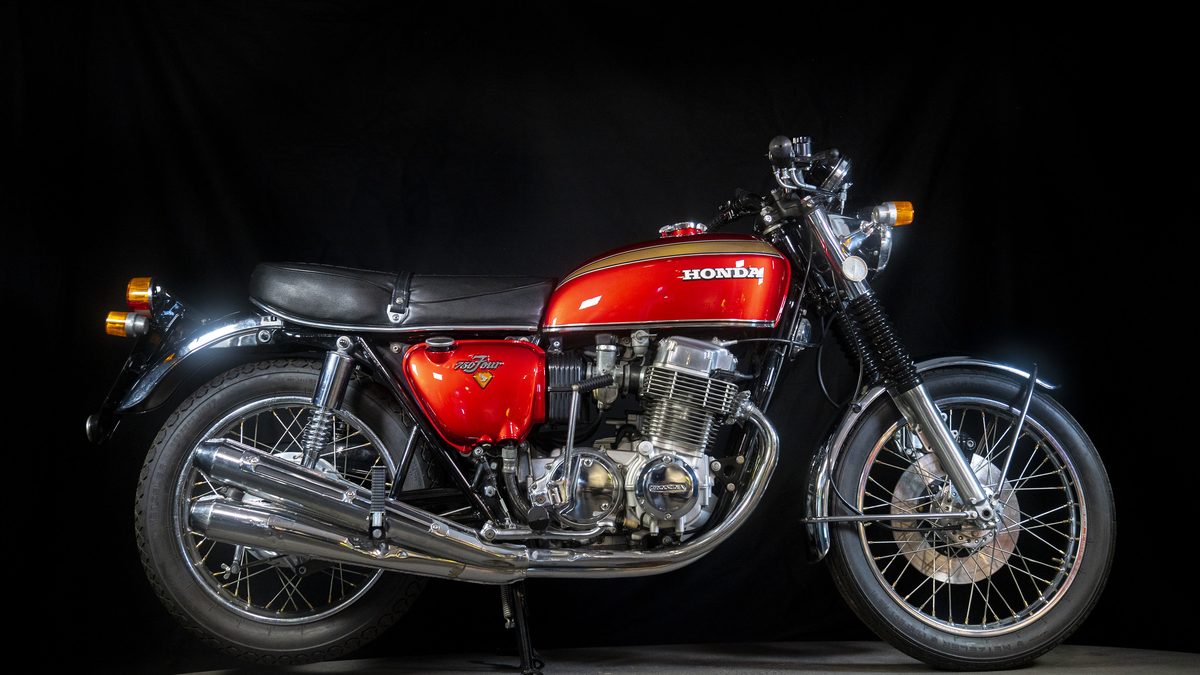
Engine: 736cc air-cooled SOHC inline-four, 61 x 63 mm, four 28mm Keihin carbs, about 67 hp at 8,000 rpm (DIN); period literature often quotes 68 hp at 8,500 rpm
Years: 1969-1978 (SOHC: K0 to K8, plus the F0 to F3 Super Sport)
Weight: About 480 lb / 218 kg dry (K1 to K6); about 500-510 lb for K7, K8 and F
Final drive: Chain, 5-speed
Aftermarket: Huge
Build difficulty: Intermediate
Value: Rough projects roughly $2,000-$3,500; good later K and F riders roughly $4,000-$8,000 (in line with our value calculator); early K0s, above all the first 7,414 'sandcast' bikes, are collector money and too valuable to cut. Directional only, not an appraisal.
Why the CB750 matters
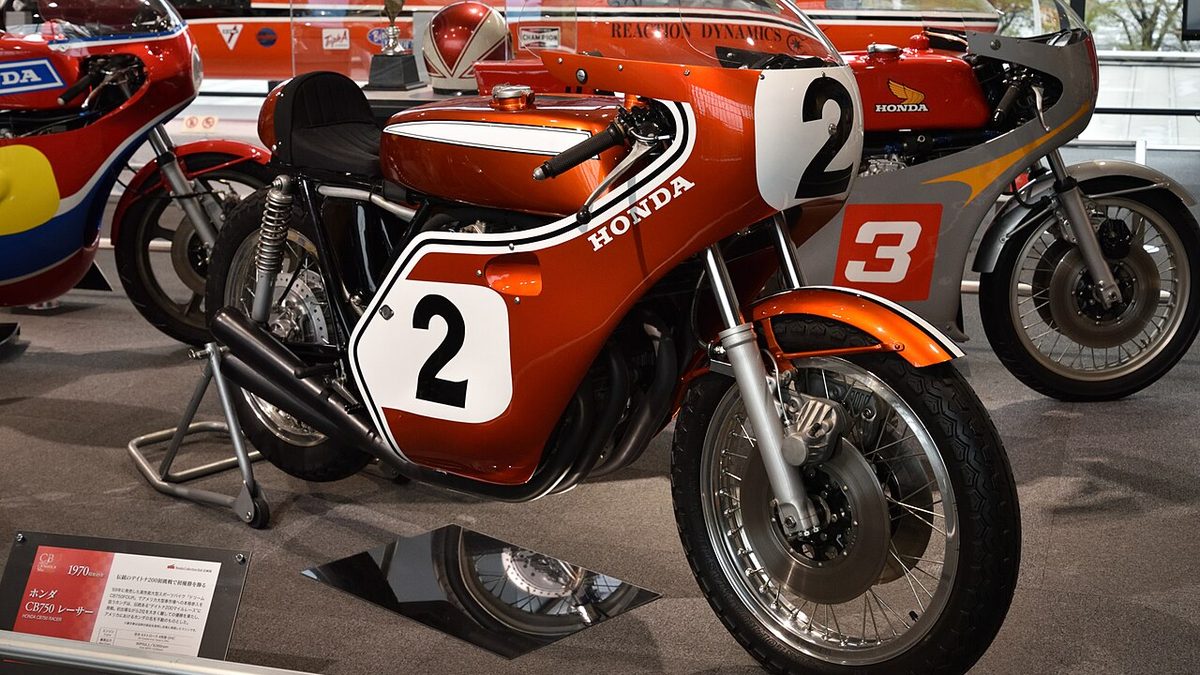
Honda showed the CB750 Four at the 1968 Tokyo Motor Show and put it on sale in 1969 with a 736cc single-overhead-cam inline-four and a hydraulic front disc brake, a combination no affordable mainstream motorcycle had offered before. It is widely credited as the first bike to be called a "superbike", and in 1970 Dick Mann won the Daytona 200 on a CR750, the factory racing version. That reputation is why so many survive and why the aftermarket around them is still active.
Which CB750 is which: K, F and Hondamatic
All 1969 to 1978 CB750s are single-cam (SOHC) bikes, but the model codes matter when you buy parts.
| Model | Years | What a builder should know |
|---|---|---|
| K0 | 1969-70 | The original. The first 7,414 have "sandcast" (permanent-mould) crankcases and are collector bikes. Do not cut one. |
| K1 to K6 | 1970/71-1976 | The usual cafe donors: 4-into-4 exhaust, single front disc, rear drum, 19in front and 18in rear wire wheels. The K6 got a stronger swingarm. |
| K7, K8 | 1977-78 | F-style engine with an accelerator pump, a 17in rear wheel with a wider tyre, and an O-ring chain. A bit heavier and longer. |
| F0, F1 (Super Sport) | 1975-76 | Factory 4-into-1 exhaust, a rear disc brake, a stronger swingarm and lower gearing: the sportiest starting point. |
| F2, F3 | 1977-78 | Bigger valves and a stronger bottom end (listed at about 70 hp by the SOHC/4 Owners Club), twin front discs and Comstar alloy wheels. |
| CB750A Hondamatic | 1976-78 | Two-speed semi-automatic with a detuned engine and smaller carbs. Not a sensible cafe donor. |
Sources give the K1 as either a 1970 or a 1971 model, depending on market and how they count model years.
CB750 SOHC specs that matter for a build
| Engine | 736cc air-cooled inline-four, 61 x 63 mm, chain-driven single overhead cam, two valves per cylinder, dry sump with a separate oil tank |
|---|---|
| Power | About 67 hp at 8,000 rpm (DIN); period literature often quotes 68 hp at 8,500 rpm. The SOHC/4 Owners Club lists the F2/F3 engine at about 70 hp |
| Carburettors | Four 28mm Keihin slide carbs, one per cylinder; accelerator pump added on K7, K8 and F2 |
| Ignition and charging | Points ignition; three-phase wound-field alternator (the 1969 bikes used a contact-point voltage regulator) |
| Gearbox and drive | 5-speed; chain final drive (18/48 sprockets on K1 to K6; early K0s varied; 15/41 on K7/K8) |
| Frame | Tubular steel double cradle |
| Brakes | K: single front disc, rear drum. F0/F1: rear disc added. F2/F3: twin front discs |
| Wheels and tyres | 3.25-19 front, 4.00-18 rear on K0 to K6 and F; 4.50-17 rear on K7/K8 |
| Wheelbase | 57.3 in on K0 to K6; 58.9 in on K7/K8 |
| Weight | About 480 lb (218 kg) dry for K1 to K6; about 500-510 lb for K7, K8 and F |
| Fork tubes | Owners report 35mm on SOHC F models. No primary source found, so measure yours before ordering clip-ons |
SOHC or DOHC? Do not mix them up
From 1979 Honda sold a completely different CB750 with a double-overhead-cam, 16-valve engine (about 749cc, 62 x 62 mm, constant-vacuum carbs). It shares the name, not the parts. Listings often just say "CB750", so check the year and the engine before buying a bike or a part: engine parts, forks (owners report 37mm tubes on 1981-on DOHC F models) and many chassis parts differ between the two. Owners' forums keep them in separate sections for that reason.
Common Honda CB750 problems
- The charging system is the most commonly cited weak spot. The alternator is a wound-field type, and the 1969 bikes used a contact-point voltage regulator. Tired rotor windings are the usual suspect, so check the regulator and charging output too.
- A little rattle from the clutch and internals is normal when cold; Motorcyclist warns that 'evil sounds from the bottom end' once warm are bad news. Ask when the cam chain was last checked.
- Owners report that the alternator rotor bolt can work loose on SOHC engines, and a loose rotor can damage the crankshaft taper.
- The single front disc on K models is weak by modern standards (Motorcyclist: 'it takes a serious squeeze'), and front calipers can stick.
- The four carbs are fussy: Silodrome calls them 'famously tricky', and they are hard to run well on pod filters.
What to check before you buy a Honda CB750
- Listen once the engine is warm, and ask when the cam chain was last adjusted and the primary chain tensioner last checked.
- Check charging voltage at idle and at higher revs, and ask whether the rotor or regulator has been replaced.
- Look for blue smoke from the exhaust and oil weeping around the head gasket.
- Check the front caliper for sticking and the wire wheels for broken spokes.
- On a 1969-70 K0, check the engine number: sandcast cases are CB750E-1007414 or lower, have a rough finish and 10 clutch-cover screws instead of 11. Sellers often mislabel bikes and parts as 'sandcast'.
Building a Honda CB750 cafe racer: what catches people out
Often called the original Universal Japanese Motorcycle, and one of the most popular donors with cafe builders, so parts support is broad.
- Swapping to an aftermarket 4-into-1 or fitting pod filters means the four carbs need re-jetting; Silodrome notes they are 'famously tricky' and hard to run well on pods.
- A 1969-70 K0, especially a sandcast, carries a large collector premium; build a K1 to K8 or an F rather than cut one.
- The stock ignition uses points and the charging system is a known weak spot, so an electronic ignition and a check of the rotor, regulator and charging output are sensible reliability jobs.
- Measure your fork tubes with calipers before ordering clip-ons: owners report 35mm tubes on SOHC F models, and the later DOHC bikes use different forks.
CB750 cafe racer parts, in build order
Some links on this page are Amazon affiliate links. As an Amazon Associate I earn from qualifying purchases, at no extra cost to you. How we choose and rank products.
Work through a Honda CB750 in this order so nothing gets redone: running and safe first, looks last. The build sequence explains why, the wiring basics cover the electrics, the seat guide covers measuring for a universal seat, and the cost breakdown shows what each step costs.
- Electrical Search on Amazon →
- Suspension & brakes Search on Amazon →
- Wheels & tyres Search on Amazon →
- Bars & controls Search on Amazon →
- Seat & subframe Search on Amazon →
- Exhaust & intake Search on Amazon →
These open an Amazon search for the CB750. Fitment varies by year and model code, so check the listing against your exact bike before buying. We never publish scraped prices.
Honda CB750 cafe racer: FAQ
Is the Honda CB750 a good cafe racer donor?
Yes, if you start from the right one. The 1969-1978 single-cam CB750 is one of the most popular cafe donors, mechanically well understood and widely supported. The downsides are weight (about 480 lb dry for most K models), width, weak stock brakes and an ageing charging system. Build from a K1 to K8 or an F, not a collectible K0.
Which CB750 years are SOHC?
All CB750s from 1969 to 1978 are single overhead cam (SOHC): the K0 to K8, the F0 to F3 Super Sport and the CB750A Hondamatic. From 1979 the CB750 used a different double-overhead-cam, 16-valve engine, and most engine and chassis parts do not swap between the two.
What is a sandcast CB750?
The first 7,414 CB750s, built from 1969, used crankcases made by permanent-mould casting (usually called sandcast) before Honda switched to die-casting. They are identified by an engine number of CB750E-1007414 or lower, a rough case finish and 10 clutch-cover screws instead of 11. They are collector bikes, and the label is often misused by sellers.
What size clip-ons fit a CB750?
Owners report 35mm fork tubes on SOHC F models, but we found no primary source for every year, so measure your own tubes with calipers before ordering. Do not use DOHC figures: owners report 37mm tubes on 1981-on DOHC F models.
How much horsepower does a CB750 SOHC make?
The original 736cc engine is rated at about 67 hp at 8,000 rpm (DIN); period literature often quotes 68 hp at 8,500 rpm. The SOHC/4 Owners Club lists the later F2 and F3 Super Sport engines at about 70 hp. Expect less at the rear wheel, and less again from a tired engine.
What tyre sizes does a CB750 use?
K0 to K6 and the F models run a 3.25-19 front and a 4.00-18 rear on the original wheels. The K7 and K8 switched to a 17-inch rear with a 4.50-17 tyre. Many cafe builds change wheels, so check what is actually fitted.
Related donor bikes
Comparing options? See the Honda CB550, Honda CX500 and Yamaha XS650 guides, or every bike on the donor bike list. Thinking of a Honda CB750 bobber or tracker instead? See bobber vs cafe racer.
Sources
- Honda: the 1969 CB750 Four (company history)
- Wikipedia: Honda CB750 and CR750
- SOHC/4 Owners Club: CB750K models, specifications and changes by year
- Motorcyclist: 1969-1978 Honda CB750 buying notes
- Silodrome: Honda CB750 buying guide (charging, carbs, SOHC vs DOHC)
- SOHC/4 Owners Club: CB750F Super Sport changes and specifications
- SOHC/4 Owners Club: the CB750A Hondamatic
- SOHC/4 Owners Club: how to identify the sandcast 750s
- Cycle World (1969): first road test of the CB750
- Cycle World (1979): the new DOHC CB750F
- Motorcycle Classics: the CB750F Super Sport
- CB750.com owners forum: SOHC F fork tube size (owner report)
- CB750.com owners forum: DOHC fork swap and 37mm tubes (owner report)
- CB750.com owners forum: SOHC rotor bolt working loose (owner report)
Values are directional estimates from our value calculator, not market data or an appraisal. Always check current sold comps for your market before buying or selling.