Bobber vs Cafe Racer: What Actually Separates Them
Both styles start the same way, by taking things off an old bike. What separates them is what you are stripping it for: a cafe racer is pared back to go fast and handle, a bobber to sit low and look raw. That one decision sets the bars, the seat, the pegs and how the bike feels on a Sunday ride.
Where each style came from
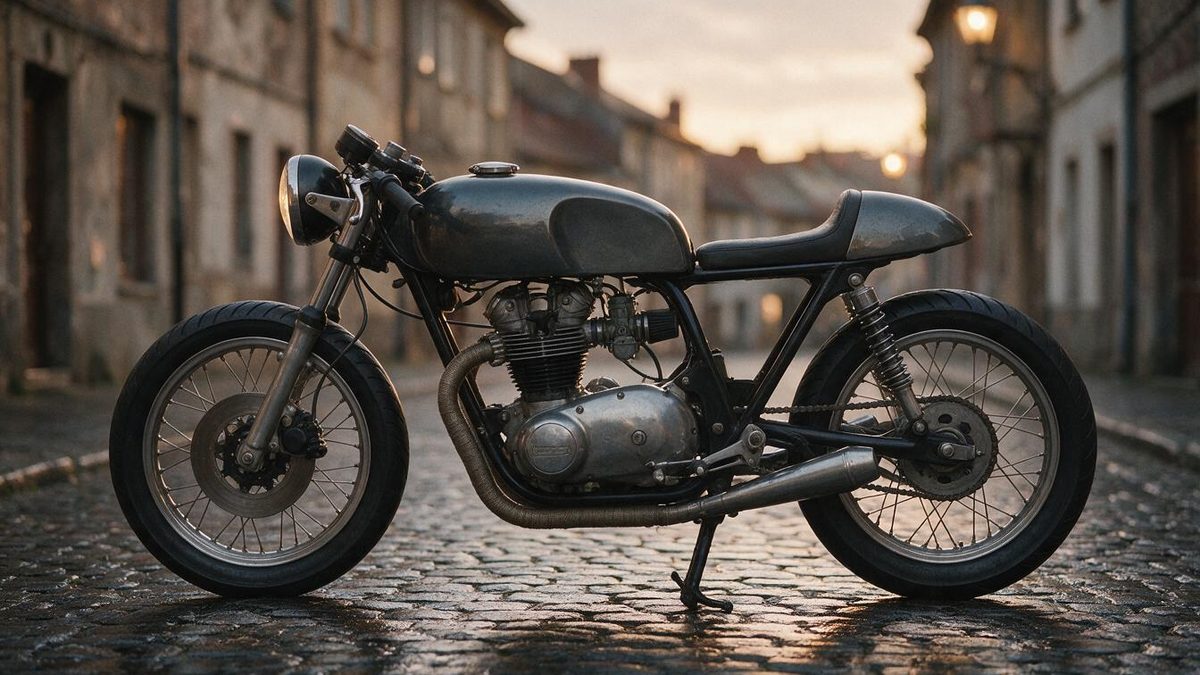
The cafe racer grew out of 1950s and 60s Britain, where young riders around London's Ace Cafe, the "ton-up boys", stripped their British twins and singles of anything heavy and fitted low bars to race between cafes and reach 100 mph, "the ton". Speed and handling were the whole point, so the parts that define the style are performance parts: clip-on bars, rear-set footpegs and a single seat.
The bobber is American. The look first appeared in the mid-1930s, copied from stripped-down Class C racers, and spread widely after the Second World War, when riders "bobbed" their bikes by cutting down or removing fenders and pulling off lights, bags and anything else they did not need, to make a heavy bike lighter and simpler. The result, low and stripped with a solo seat (and on modern bobbers, often fat tyres), is what defines a bobber today, far more than any racing purpose.
Side by side: bobber, cafe racer, scrambler and tracker
Scramblers and trackers come from the same strip-it-down family and get mixed up with both, so here are all four.
| Cafe racer | Bobber | Scrambler | Tracker | |
|---|---|---|---|---|
| Born | London, 1950s and 60s (Ace Cafe, the ton-up boys) | USA, 1930s-40s, popular after WWII | Britain, from 1920s scrambles racing; road scramblers boomed in the 1950s-60s | USA, flat-track oval racing |
| Idea | Strip it for speed between two points | Cut off everything you do not need | A road bike you can take off-road | A dirt-oval racer for the street |
| Bars | Clip-ons or clubmans, low | Flat, drag or mini-ape, mid-height | Wide, braced, upright | Wide, flat motocross-style |
| Seat | Solo seat, usually a hump or tail cowl | Low solo seat, often sprung | Long flat bench | Short flat seat, often with side number boards |
| Riding position | Leaned forward, feet back (rearsets) | Upright or slightly laid back, low | Upright, standing-friendly | Upright, elbows out |
| Fenders | Short, tidy | Chopped ("bobbed") or removed | High front or none | Minimal, often none at the front |
| Exhaust | Low, often megaphone or reverse-cone | Short, low, loud | High-mounted, away from the dirt | High or tucked, often 2-into-1 |
| Tyres | Road tyres, narrow-ish | Often fat; rear commonly a smaller-diameter wheel | Dual-purpose / knobbly | Dirt-track style or block tread |
| Typical donors | Honda CB, Yamaha XS/SR, BMW airheads, Triumph twins | Harley Sportster and Big Twins, Japanese cruisers | Triumph twins, Honda CL, Yamaha XS650, SR400 | Yamaha XS650, SR400, Harley Sportster |
These are the typical cues, not rules. Builders mix them freely, and plenty of good bikes sit between two styles.
How they ride
A cafe racer puts your weight forward over the front wheel. That helps the bike turn in and feels right at speed, when the wind holds your chest up, but it loads your wrists and neck in traffic and on long days. Low clip-ons also cut the steering lock, so U-turns get wider.
A bobber keeps you upright and low. It is easier on the body around town and on relaxed rides, and a low seat makes it easy to flat-foot at a stop. The trade-offs are usually suspension travel (low bobbers are often lowered or run short shocks) and comfort over bumps, especially on a hardtail frame or with a solid-mounted seat.
Which one is easier to build?
A basic bobber is usually the shorter job: chop or replace the rear fender, fit a solo seat, change the bars and tidy the wiring and lights. A cafe racer that looks right needs more parts to agree with each other. The seat line, the tank line and the bar and peg positions all have to match, and moving the footpegs back means a rearset kit or new linkages for the gear and brake levers.
Either way, the bike underneath decides most of the cost. A donor that needs a carb rebuild, a new loom or brakes will eat more money than any style choice. Our build sequence guide covers what to fix first, and the cost breakdown shows what each level of build really costs.
Best donor bikes for each
Cafe racer: simple, air-cooled bikes with a straight, open frame line and plenty of parts support suit the look best. The classic choices are the Honda CB750 and CB550, the Yamaha XS650 and SR500, the BMW airhead twins like the R100, and the Triumph Bonneville.
Bobber: heavier, low-slung bikes with a strong engine look. The Harley Sportster is the most common starting point, followed by Harley Big Twins and Japanese cruisers. The Suzuki Savage and Yamaha's XV Virago twins are popular budget bobber donors too.
Not sure what a given donor is worth before you start? Run it through the value calculator.
So which should you build?
- Build a cafe racer if you like twisty roads, want a bike that steers sharply and do not mind a sportier, harder riding position.
- Build a bobber if most of your riding is town, short trips and relaxed weekends, or if you want a low seat and an easier first build.
- Look at a scrambler or tracker if you want the stripped look with an upright position and some dirt-road ability.
Still weighing up whether a cafe racer suits how you ride? Read the honest cafe racer pros and cons, including what they are like on long rides.
Bobber vs cafe racer: FAQ
What is the main difference between a bobber and a cafe racer?
The riding position and what each style strips the bike for. A cafe racer is built to go fast and handle: low clip-on or clubman bars, rear-set pegs and a solo seat with a hump, so the rider tucks forward. A bobber is built to look stripped and low: chopped fenders, a low solo seat, wider bars and forward or mid controls, so the rider sits upright and low.
Which is more comfortable, a bobber or a cafe racer?
For most riders and most roads, a bobber. Its upright position takes weight off the wrists, while a cafe racer puts weight on your hands and bends your knees more. A cafe racer can feel better at sustained speed, when the wind pressure on your chest balances the forward lean, but in town it is the harder bike to live with.
Is a cafe racer or a bobber easier to build?
A basic bobber is usually simpler: cut or replace the rear fender, fit a solo seat, swap bars and tidy the wiring. A cafe racer that looks right needs the seat and subframe line, the bar and footpeg position and often the tank to work together, and moving the controls rearward means linkages or a rearset kit. Neither is easier if the donor bike needs an engine or wiring sort-out first.
Can one bike be both a bobber and a cafe racer?
Not really, because the defining parts pull in opposite directions: clip-ons and rearsets versus wider bars and forward or mid controls. Hybrids exist and builders mix cues freely, but a bike is usually read as one or the other by its riding position. If you are undecided, the cheapest test is to ride a friend's bike of each style for an hour.
What is the difference between a cafe racer and a tracker?
A tracker (street tracker) borrows from American flat-track racing: wide flat bars, an upright position and a short flat seat, often with side number boards. A cafe racer borrows from British road racing: low bars, rearsets and a humped seat. They can share a donor bike, but the tracker sits you up and the cafe racer folds you down.
Are bobbers and cafe racers legal on the road?
Both can be, but removing parts is where legal problems start. Requirements vary by state and country, but working lights, a horn, at least one mirror and a readable number plate are commonly required, and some places also require turn signals or limit how far a fender can be cut. Check your state or country's equipment rules before you remove anything, not after an inspection fails.
Sources
- Ace Cafe London: history of the cafe
- Wikipedia: Café racer (ton-up boys and the Ace Cafe)
- Wikipedia: Bobber (from 1930s Class C racers to post-war customs)
- Wikipedia: Motocross (scrambles racing began in Britain in 1924)
- Cycle World: the 1960s street scrambler era
- Wikipedia: Dirt track racing (the American flat-track origin of trackers)