The Best Cafe Racer Boots
The right cafe-racer boot reads like an ordinary boot off the bike but still protects the ankle, toe and heel — and, ideally, carries a real EN 13634 rating. Here's what actually protects, ranked from retro-leather to sneaker-light, with certification flagged where makers don't state it.

TCX Fuel WP
The Fuel is the archetypal cafe/street boot — vintage-brown full-grain leather that reads like an ordinary boot off the bike, a waterproof membrane, and a reinforced ankle and heel. TCX sells its street boots as EN 13634 certified; check the level printed on the tag inside.

Alpinestars SMX-1 R V2
A short sport-style riding boot with proper malleolus (ankle-bone) armour and a slip-resistant sole. Alpinestars lists it as CE-certified — the most protective short boot here. Less 'retro', more 'will actually save your ankle in a stand-still drop'.

Alpinestars Faster-3 Rideknit
A low riding shoe that walks like a trainer and passes anywhere off the bike, with a breathable knit upper for hot air-cooled traffic. The title states CE certification; ankle coverage is short by design, so it trades height for everyday comfort.
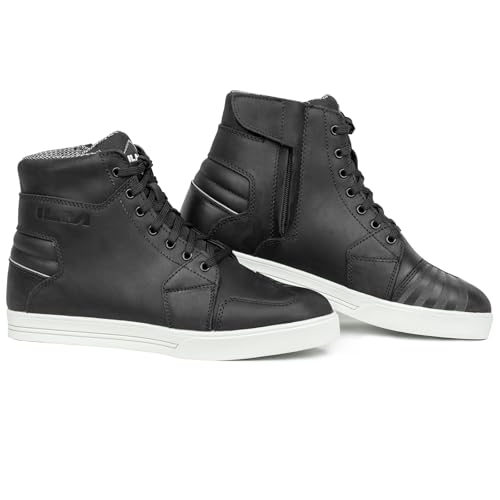
ILM UB32 Riding Shoe
A budget waterproof leather riding shoe with an anti-slip sole. ILM is an entry brand — confirm the exact protection and any CE claim on the listing before you rely on it, and treat it as a commuter shoe rather than a race boot.

Milwaukee Leather Engineer
The pull-on engineer silhouette is pure retro and slips on in seconds. Be honest with yourself, though: engineer boots like this are a fashion/heritage choice, not certified motorcycle PPE — the thick leather helps in a slide, but there's little dedicated ankle armour. Wear them knowing that.
What actually matters in a cafe racer boot
A cafe racer puts you in a forward crouch on small rearset pegs, usually on an older air-cooled bike you also wheel around the garage. That use case rewards a few specific things over raw race-boot armour:
- Ankle (malleolus) armour. The ankle bone is a common break point in the low-speed slides and stand-still drops that make up most urban get-offs. Look for a hard cup or firm insert over the ankle, not just extra padding.
- Reinforced toe box and heel counter. These protect against crush — a bike tipping onto your foot at a stop — and give the boot structure so your foot can't fold in a slide.
- A heel that catches the peg. A shaped heel keeps your foot located on a small rearset peg under braking and vibration instead of slipping off.
- An oil- and fuel-resistant sole with a shank. Carbureted classics mean fuel and oil contact is likely; a resistant compound won't soften, and a shank stops the sole flexing enough to transmit crush forces.
- A closure that won't snag the shifter. Long laces or dangling straps can catch the shift lever underfoot; low-profile lacing with a hook-and-loop or zip overlay is safer.
- A look that passes off the bike. The whole urban-boot category exists so you can walk into a cafe or office without looking like you're in a track suit — that's the point, not a compromise.
The CE standard: EN 13634
The motorcycle-boot standard is EN 13634:2017 — "protective footwear for motorcycle riders". It rates four mandatory zones independently, each at Level 1 or Level 2: height of the upper, impact abrasion resistance (how long the material resists a slide), impact cut resistance, and transverse rigidity (crush resistance). A maker can also test for optional claims and mark them separately — most usefully WR (water resistance) and fuel-oil resistance of the sole. A compliant boot carries a tag, usually behind the tongue, with a motorcycle pictogram and the levels achieved.
Two things worth knowing. First, EN 13634 is a different standard from EN 13594 (gloves) and EN 1621 (standalone armour inserts): a finished boot is certified under EN 13634, so a boot marketed as "EN 1621 certified" is mislabelled — that code applies to the armour pad, not the footwear. Second, many makers publish only "certified to EN 13634" without stating the level per zone; where that's the case we don't invent a level, we just say it's certified.
Which style fits your build
Short urban lace-ups (the TCX Street/Fuel family) give the best protection-to-look ratio — full certification in a low-profile boot, with less shin coverage than a touring boot. Retro leather boots nail the period look and are usually certified when sold as a moto line, though buckles and distressing can add cost without adding protection. Sport riding shoes and sneakers (Alpinestars Faster/J-6 line) are the most comfortable to walk in and blend into everyday wear, trading ankle height for a low profile. Engineer and harness boots give the purest heritage silhouette and slip on fastest, but most are not certified moto PPE — a style-first choice, not protective gear.
How to choose, and what to avoid
Sizing is the first trap: European brands size in EU and the printed US conversion is approximate, so check each brand's own chart rather than a universal table — riders often go a half-size either way depending on the last. Weigh waterproof against breathable: a membrane blocks rain but runs hotter, which matters on an air-cooled bike in stop-and-go traffic, so a non-WP boot can be the better summer choice. Expect a genuine leather boot with internal armour to need a short break-in before the ankle stops feeling stiff.
Cafe racer boots — FAQ
What CE standard should cafe racer boots meet?
EN 13634:2017 is the motorcycle-footwear standard. It rates four mandatory zones — height of the upper, impact abrasion resistance, cut resistance, and transverse (crush) rigidity — at Level 1 or Level 2, with optional marks for water resistance (WR) and fuel-oil resistance of the sole. A boot certified to EN 13634 is a stronger claim than "leather" alone. Note it is a different standard from EN 13594 (gloves) and EN 1621 (armour inserts) — a finished boot is certified under EN 13634, never "EN 1621".
Are engineer or harness boots okay for a cafe racer?
They nail the retro look and slip on fast, but most engineer boots sold as fashion are not certified motorcycle PPE and carry little dedicated ankle armour. The thick leather does help in a slide, but treat them as a style choice rather than protective gear — look for an EN 13634 tag if real protection matters to you.
Do I need waterproof riding boots?
A waterproof membrane blocks rain but also reduces airflow, so WP boots run hotter — a genuine trade-off on an air-cooled bike sitting in traffic. If you mostly ride dry and warm, a non-WP boot is cooler and lighter; if you commute year-round, waterproofing earns its keep.
Short riding shoe or a taller boot?
A low shoe walks better and hides in everyday clothes, but a taller boot covers more of the ankle and shin — EN 13634 even rates upper height as one of its four zones. Choose height for how much protection you want versus how much you value walking around off the bike.
How should riding boots fit, and how do I size them?
European brands like TCX and Alpinestars size in EU and convert only roughly to US, so check the brand’s own size chart rather than a generic table. They should be snug enough that your foot doesn’t slide, with room to wiggle your toes; stiff leather and internal armour need a short break-in before they stop feeling rigid.
Is "genuine leather" enough for protection?
No. Leather is an abrasion material, not a certification — and "genuine leather" is actually a lower grade than full- or top-grain. A protective boot needs reinforced ankle, toe and heel structure and, ideally, an EN 13634 rating. Fashion "biker boots" borrow the look with none of that structure underneath.
Links go to Amazon (affiliate-tagged). Tiers not scraped prices — confirm current pricing and the CE/EN 13634 spec on the maker's page before buying.