The Best Cafe Racer Helmets
The look matters, but a novelty lid that cracks is a bad trade. Here are the helmets that carry the cafe-racer silhouette and a real safety rating — ranked by how you ride, not by which brand paid the most.

Shoei RF-1400
The full-face the community defaults to — quiet, light, superb optics. Not "retro-styled", but the one riders keep once the cafe-cosplay wears off.

Bell Custom 500
The classic low-profile open-face that actually suits a cafe racer, with a real shell in multiple sizes (not a one-shell novelty lid). Pair with goggles or a shield — an open-face gives up all chin protection.

Biltwell Gringo S
Full-face protection with the vintage silhouette and a bubble shield. The look most people picture, without a novelty helmet’s safety compromise — and this one is sold as ECE 22.06 certified.
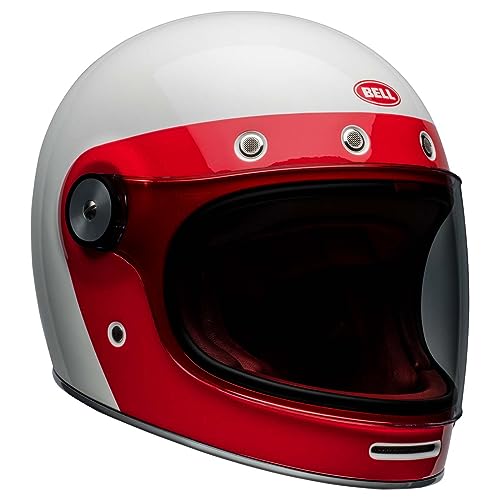
Bell Bullitt
The definitive modern retro full-face — flat shield, wide panoramic view, endless colourways. Heavier and louder than the Shoei, but it is the look most cafe builders picture. Check the label for the exact ECE revision on your colourway.

ILM Z503 Retro Full-Face
A budget retro full-face that still carries DOT certification — a low-cost way into the look. Finish and comfort are basic, but it is a real, rated lid rather than a costume-only novelty helmet.
Full-face, open-face or retro full-face?
Three shapes fit the cafe-racer world, and they trade the look against protection in different ways. A full-face is the only design that protects the chin and jaw in a frontal impact — the safest, if the least "period", choice. An open-face (3/4) nails the classic look and gives huge airflow and vision, but leaves the chin and face fully exposed by design; legal eye protection (a shield, bubble visor or goggles) is mandatory, not optional. A retro full-face like the Bell Bullitt or Biltwell Gringo is the real compromise piece: modern chin-bar coverage styled like a 1960s race helmet.
Two honest caveats. Research from the European COST 327 study is commonly cited for the finding that a substantial share of real-world impacts land on the chin and face region — the exact percentage is disputed, but the direction is clear enough that giving up chin protection is a real decision, not a cosmetic one. And a retro helmet's bubble shield is not a weather seal: the short curved visors don't gasket to the face like a modern sport shield, so rain and wind reach your eyes around the edges. Plan on separate goggles for wet riding.
The standards: ECE 22.06, DOT and Snell
ECE 22.06 (UN Regulation 22, revision 06) is the current European standard and became mandatory for new-model type-approval from January 2024. Versus the older 22.05 it adds a rotational (oblique) impact test, expands the tested impact points from six to eighteen, and tests across a wider range of speeds — and it is third-party, government-mandated approval before a helmet can be sold. DOT FMVSS 218, the US standard, is self-certified: the maker tests and certifies its own helmet, and NHTSA only spot-checks after sale — which is why counterfeit or non-compliant "DOT" lids exist that a buyer can't spot by eye. Snell M2025 (which superseded M2020 in October 2024) is voluntary and independent: Snell tests every unit submitted, and it's the extra layer some riders and race programs specifically look for.
One clarification worth making, because marketing muddies it: MIPS is a technology, not a standard. ECE 22.06 requires a rotational-impact pass from every helmet sold under it, whether or not it carries a MIPS-branded liner — so the deciding fact is the certification on the label, not the presence of a logo.
Getting the fit right
Fit beats brand. Heads sort roughly into round, intermediate and long oval shapes, and a shell cut for the wrong profile will feel fine around the circumference but hot-spot at the temples or forehead. Measure about an inch above your eyebrows at the widest point and match that number to the specific brand's chart — sizing isn't standardised. The rule that saves people money: cheek pads break in, the shell doesn't. Padding compresses and settles over the first several rides — riders commonly report a noticeable easing — so a helmet that's snug in the cheeks on day one is right; one that presses on the crown or forehead will still press after a year, because the EPS liner never gives.
The retro-helmet honesty check
Check the label, not the era. Current-production Bullitt and Gringo units are commonly sold as DOT plus ECE 22.06, but retro styling tells you nothing on its own — earlier runs of the same model, budget imports and old stock can carry only DOT or the older ECE 22.05, meaning no rotational-impact testing at all. The sticker sewn inside the specific helmet is the only thing that settles it.
Cafe racer helmets — FAQ
Are open-face helmets safe for cafe racers?
A genuine DOT- or ECE-rated open-face protects the areas it covers to the same tested standard as a full-face — but by design it leaves the chin and lower face completely exposed. Research from the COST 327 European study commonly attributes a substantial share of real-world helmet impacts to the front and chin region (the exact percentage is disputed between sources), so treat an open-face as a known, deliberate trade-off rather than an unsafe product — and always ride it with goggles or a shield.
ECE vs DOT vs Snell — which matters?
They test differently, not just to different thresholds. DOT (FMVSS 218) is self-certified by the manufacturer with NHTSA doing random spot-checks after sale; ECE 22.06 is third-party, government-mandated pre-market approval that now includes a rotational (oblique) impact test; Snell (currently M2025, formerly M2020) is a voluntary lab that tests every unit submitted. For street legality a genuine current ECE 22.06 or DOT rating covers most markets; Snell is an extra voluntary layer some riders seek out.
Do retro helmets meet modern safety standards?
Some do, some don’t — it depends on the specific model and production run, not the retro look. Current Bell Bullitt and Biltwell Gringo units are sold as DOT plus ECE 22.06 certified, but older stock or cheap import retro lids may carry only DOT or the older ECE 22.05, which means no rotational-impact testing. Check the certification sticker sewn inside the specific helmet, not the marketing.
How should a cafe racer helmet fit?
Snug all around with no gaps, cheek pads holding the helmet still on your face without cutting off speech, and no pressure hot-spots at the forehead or temples. Measure your head about an inch above the eyebrows at the widest point and match it to that brand’s own chart — sizing is not standardised across brands. Cheek pads soften and settle over the first several rides; the shell and EPS liner never change shape, so never buy a size that hurts the crown expecting it to break in.
Full-face or 3/4 for a cafe racer?
For slow cruising where the look is everything, an open-face nails the aesthetic. For real speed, traffic or highway distance, a full-face — including retro full-face styles like the Bullitt or Gringo — gives back the chin protection an open-face gives up, with very little sacrifice to the cafe look. If in doubt, the retro full-face is the honest middle ground.
How often should I replace a helmet?
The widely repeated guidance from the Snell Memorial Foundation is five years from first use, and immediately after any crash impact — based on foam-liner degradation from sweat, oils and UV, plus steady improvements in helmet design and standards over that span. It is manufacturer/Snell guidance rather than a legal mandate, but it is the standard advice across the industry.
Links go to Amazon (affiliate-tagged). Tiers not scraped prices — confirm current pricing and the certification on the maker's page before buying.